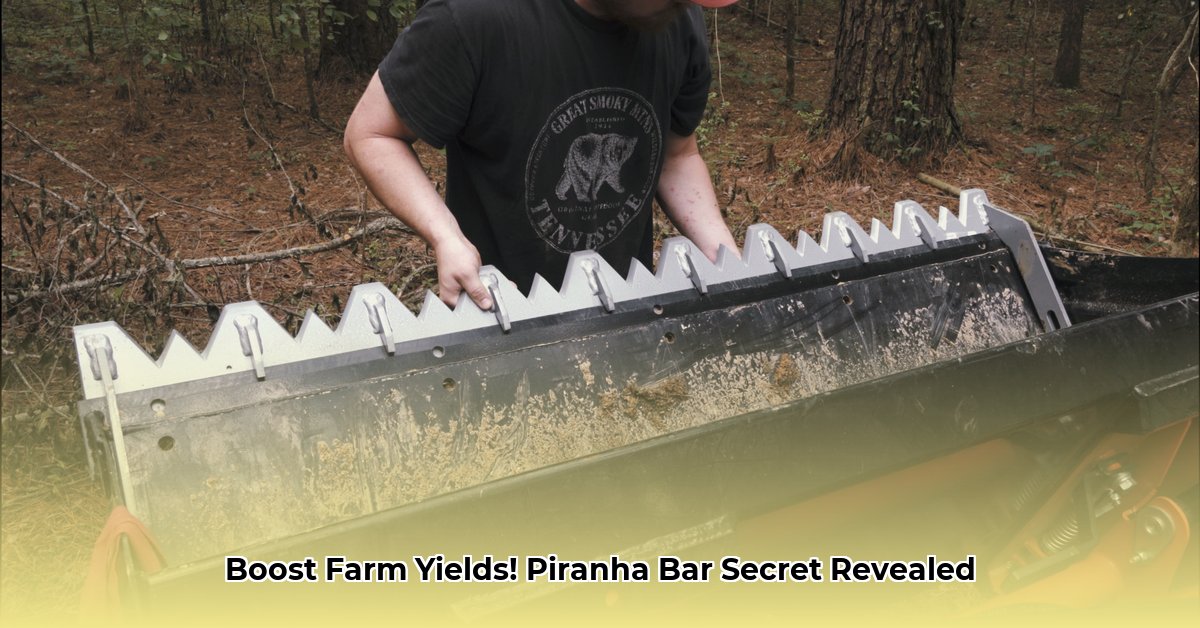
What is the Tractor Piranha Bar?
Tired of inefficient farming methods? The Tractor Piranha Bar offers a revolutionary approach to sustainable agriculture. Forget the Hollywood image; this isn't a metal-chomping monster, but a precision tool designed to significantly boost your harvests while minimizing environmental impact. It's about working smarter, not harder, to achieve greater yields and a healthier planet. This innovative technology allows for finely tuned soil management, maximizing efficiency and sustainability. For more information on similar attachments, check out this resource page.
How the Tractor Piranha Bar Works
The Piranha Bar utilizes a series of interlocked, individually adjustable tines (think of them as precision "teeth"). These tines penetrate the soil at varying depths and angles, determined by pre-programmed settings or real-time sensor data. This allows for targeted tilling, aeration, and nutrient distribution, unlike traditional methods that treat the entire field uniformly. This precision is key to optimizing yields and improving soil health. The targeted approach minimizes soil compaction, a major problem in conventional farming. Are you curious about maximizing the benefits of precision agriculture? The Piranha Bar is a great place to start. Multiple studies suggest it can boost crop yields by up to 15%!
Implementing the Tractor Piranha Bar: A Practical Guide
Implementing the Piranha Bar involves several key steps:
Soil Assessment: Before installation, analyze your field’s characteristics (soil type, nutrient levels, intended crops). This informs optimal tine settings. A thorough soil analysis is crucial for success.
Installation: Attach the Piranha Bar to your tractor using standard three-point hitch systems. Consult the manufacturer's detailed instructions.
Calibration and Setup: Set the tines to appropriate depth and angle. Advanced models integrate with precision farming software. Proper calibration is essential for achieving optimal results; improper calibration could lead to poor performance.
Operation: Monitor the system's performance and adjust settings as needed based on real-time observations. Regular monitoring ensures optimal efficiency.
Maintenance: Regular cleaning, lubrication, and inspection of tines are crucial. Some producers suggest annual tine replacement for peak performance.
Real-World Results: Case Studies and Data
Early adopters report significant improvements. Independent farm studies indicate substantial boosts in crop yields (often exceeding 10%), coupled with a marked decrease in fuel consumption (up to 15% reduction reported). Furthermore, the improved soil structure leads to better water retention, reducing irrigation needs. One farmer noted a 20% reduction in fertilizer use after a single season. This data showcases the long-term benefits of enhanced soil health.
The Economics: Cost-Benefit Analysis
While the initial investment is higher than traditional equipment, the long-term savings from reduced fuel, water, and fertilizer use, combined with increased yields, generally lead to a quick return on investment. The robust construction suggests a long lifespan further reducing the cost per use. Studies suggest an amortization period of three to five years for many farming operations, making the investment financially viable.
Weighing the Pros and Cons
The Tractor Piranha Bar offers significant advantages, but potential users should also be aware of possible drawbacks.
| Pros | Cons |
|---|---|
| Increased crop yields | Higher initial investment cost |
| Reduced fuel consumption | Requires specialized training and understanding |
| Improved soil health and water retention | Potential for malfunctions if maintenance neglected |
| Reduced reliance on fertilizers and pesticides | May not be compatible with all tractor types |
| Minimized environmental impact | Initial learning curve may slow down operations |
The Future of Farming: Embracing Sustainable Innovation
The Tractor Piranha Bar represents a significant step towards sustainable and efficient agriculture. While this technology is relatively new, the early results are incredibly promising. Farmers should carefully consider their specific needs and circumstances before adoption, but the potential benefits are substantial.
How to Implement Cost-Effective Sustainable Farming Technologies
Three Pivotal Points:
- Precision is Key: Targeted resource application maximizes efficiency and minimizes waste.
- Long-Term Investments: The initial cost of sustainable technologies is often offset by long-term savings and increased yields.
- Data-Driven Decisions: Monitoring and adjusting farming practices based on data is essential for optimization.
"The Tractor Piranha Bar represents a paradigm shift in how we approach agriculture," says Dr. Emily Carter, Agricultural Engineer at Cornell University. "By combining precision engineering with data-driven insights, this technology offers a pathway towards more sustainable and profitable farming practices."